is grief a thing with feathers, or is it a thing plucked bare and raw? is it expansion or contraction? is it binding or freeing? or perhaps it is yes and?
grief is universal and specific. we all experience grief at some point in our lives, and while the experiences and stages of grief are often similar, the details vary from person to person. we grieve on both grand (ecocide, genocide, systemic oppression, war, state and police violence) and small (death of loved ones and friends, loss of community, estrangement, divorce/breakups, illness and injury, aging of parents, selves, and children) scales. ross gay, in his collection of essays titled, inciting joy, wrote: “grief is the metabolization of change.” that metabolization is different for everyone, in form and pace.

i started thinking about a fully white assemblage in 2024 and began collecting white elements, even though i didn’t yet know what the work would be about. then, in 2025, i found myself adrift on an ocean of grief, not knowing if, how, when, or where i would come to shore. in the midst of that, i remembered the white work i had imagined and realized it was about grief. i associate white with grief because the traditional jewish burial garment is white, and white is worn on yom kippur (day of atonement). grief is a narrow place, but it is also moving through that narrow place towards something more open and expansive, towards something we cannot even imagine while we are in it. in a grief observed, c.s. lewis wrote: “i thought i could describe a state, make a map of sorrow. sorrow, however, turns out not to be a state but a process. it needs not a map, but a history.”
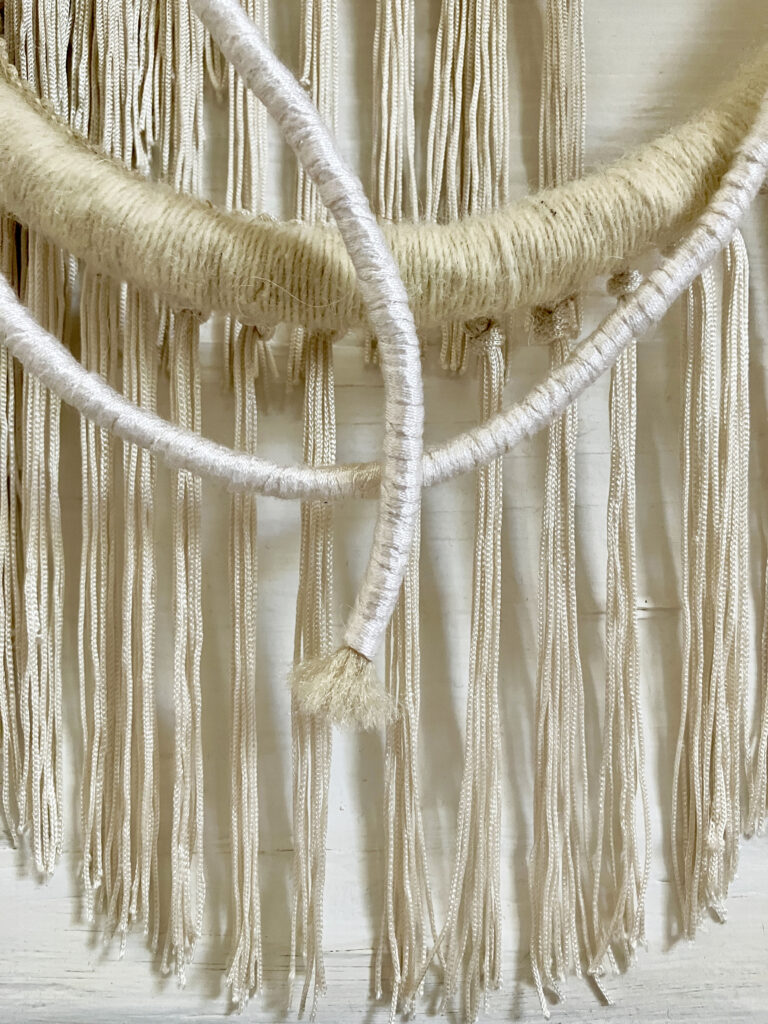
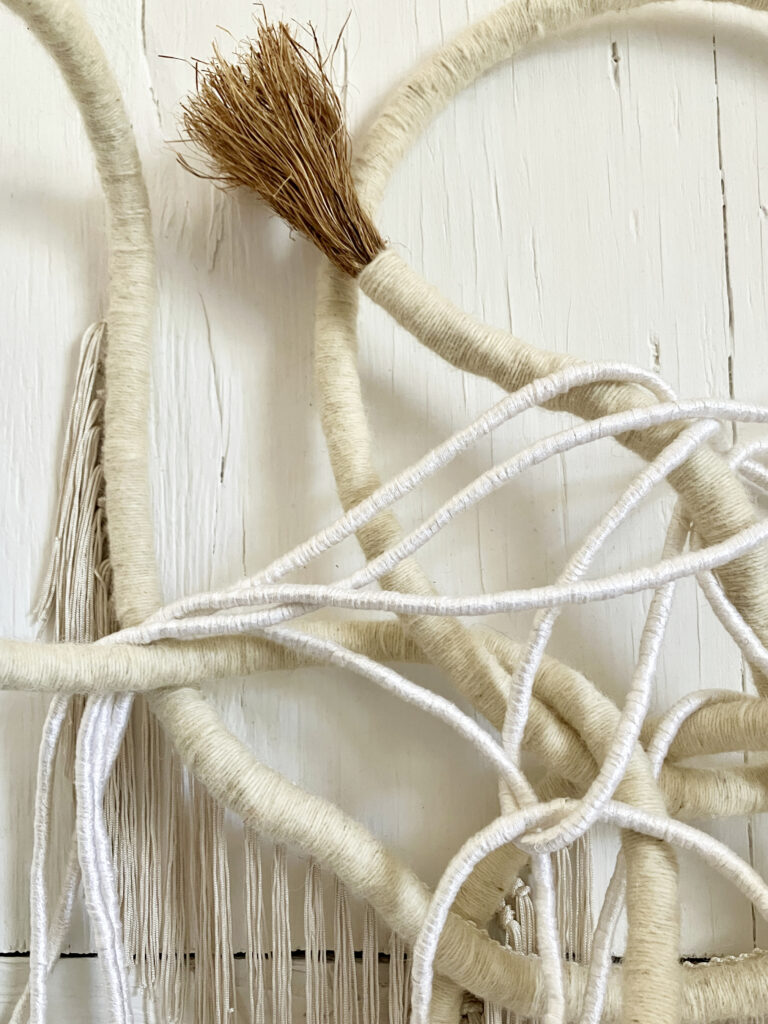
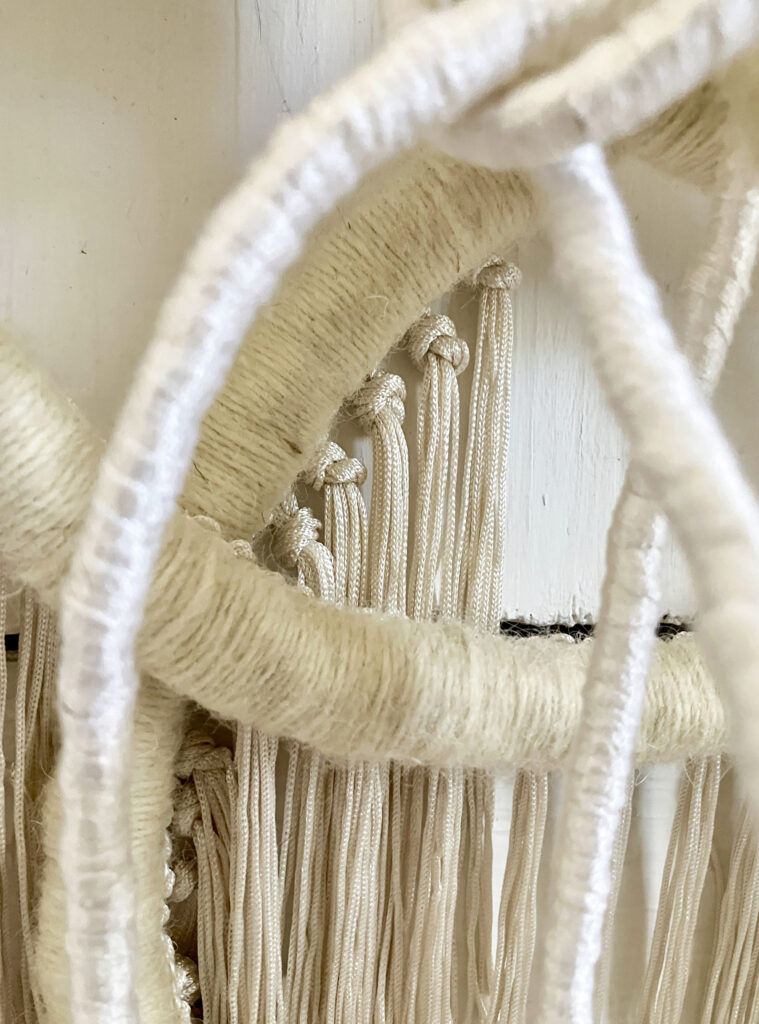
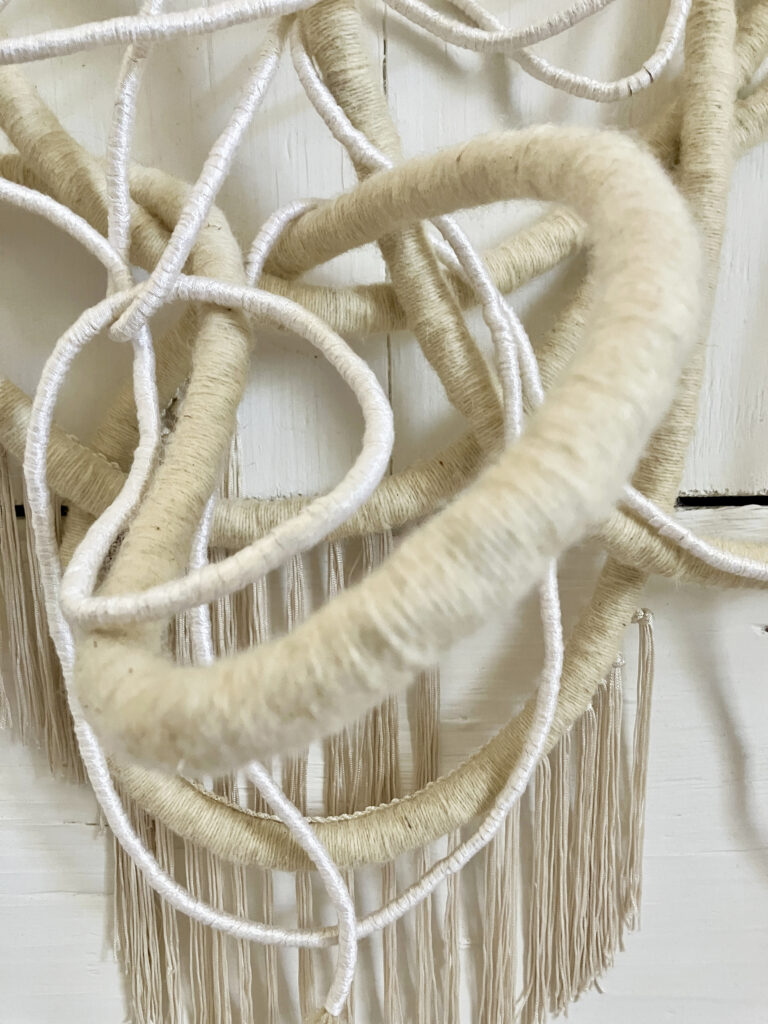
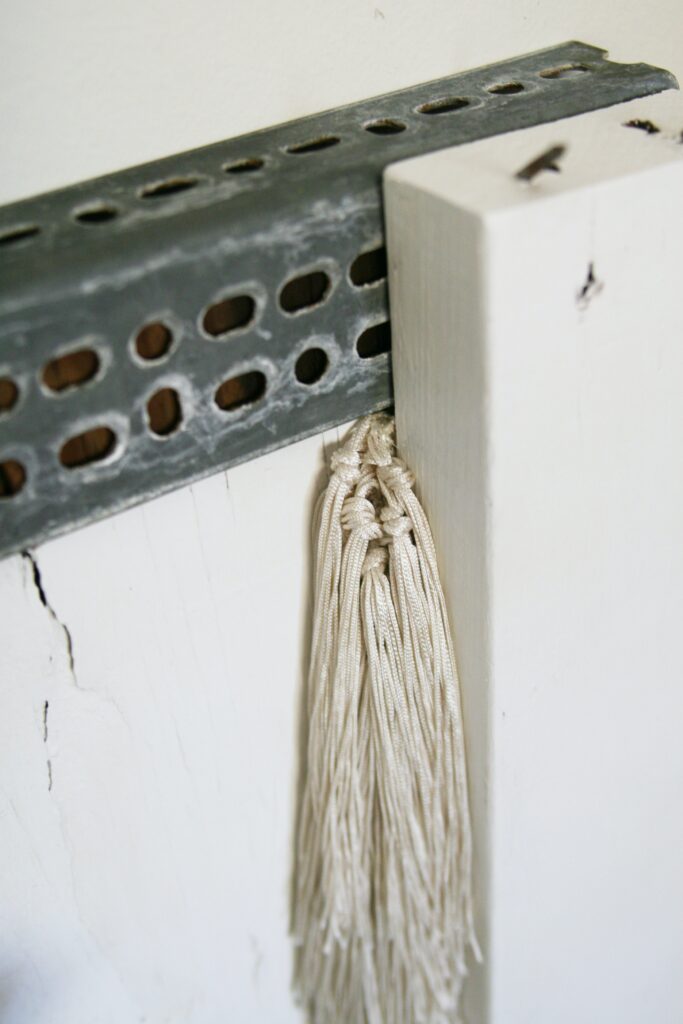
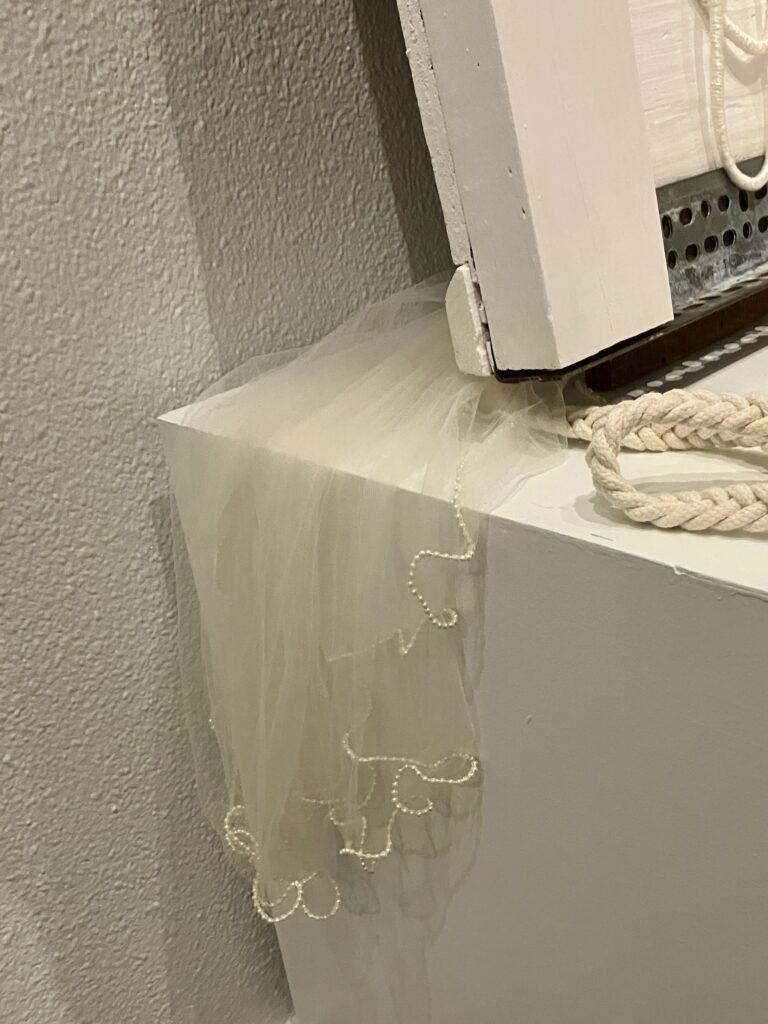
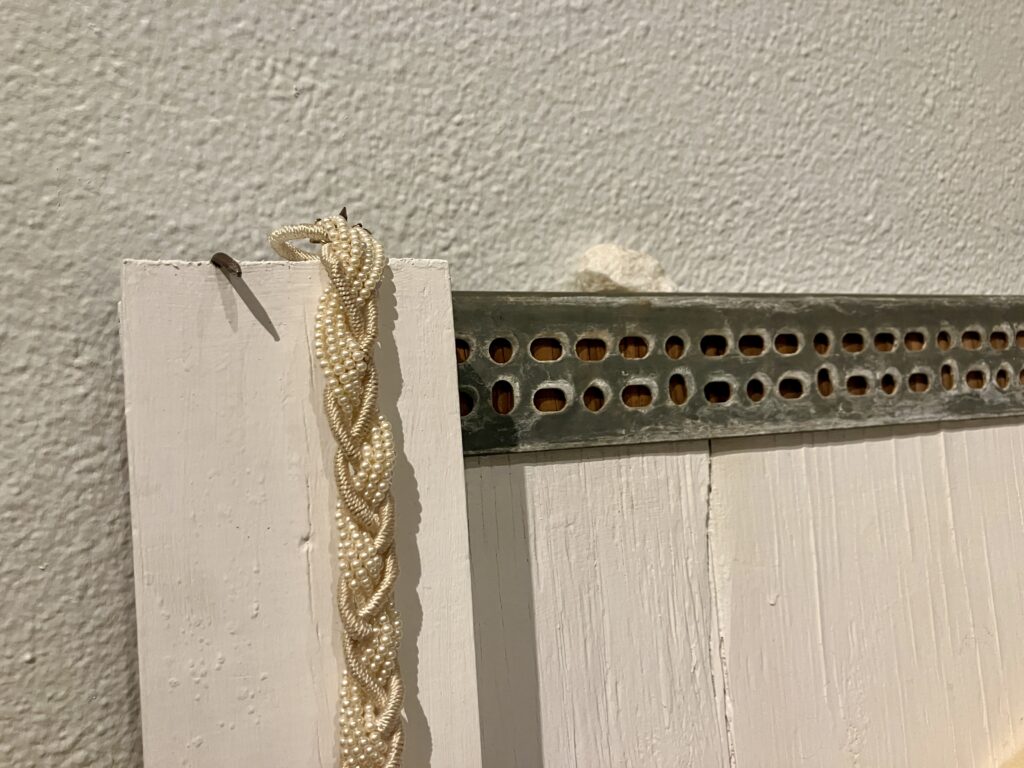
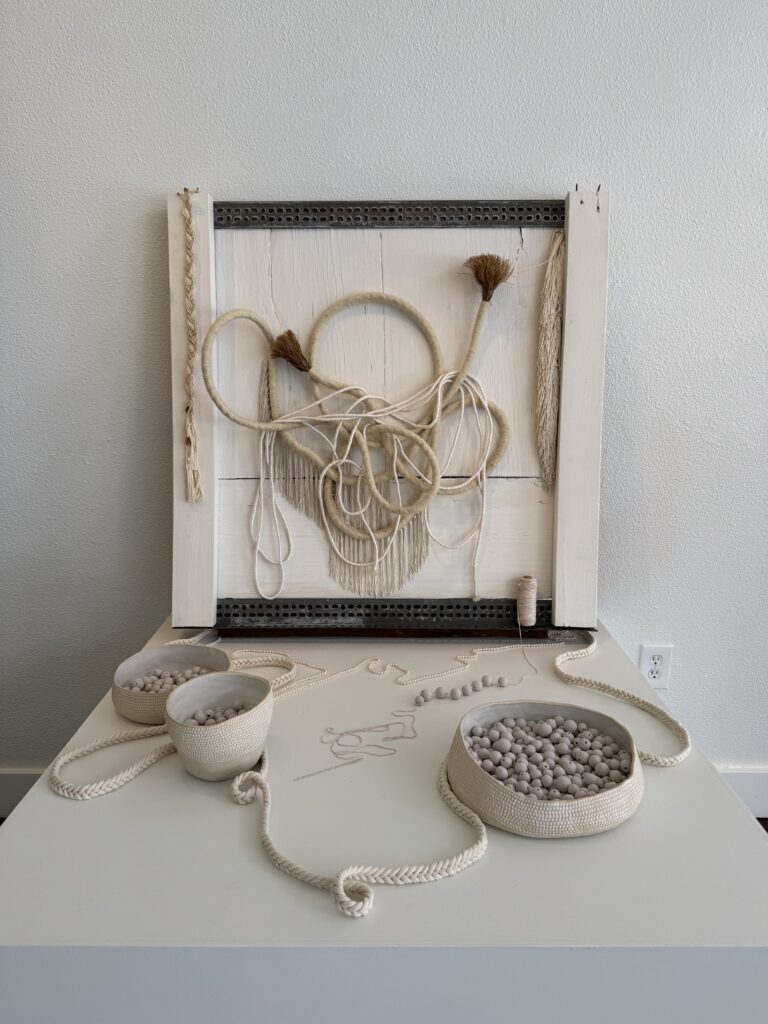
this work is a history. all materials were in my home when i moved in, or purchased from at thrift stores, estate sales, or yard sales. while researching the work of textile artist romeo reyna, i came across an ebay listing for some prepared materials from his estate. i then began the very slow work that is thread wrapping.
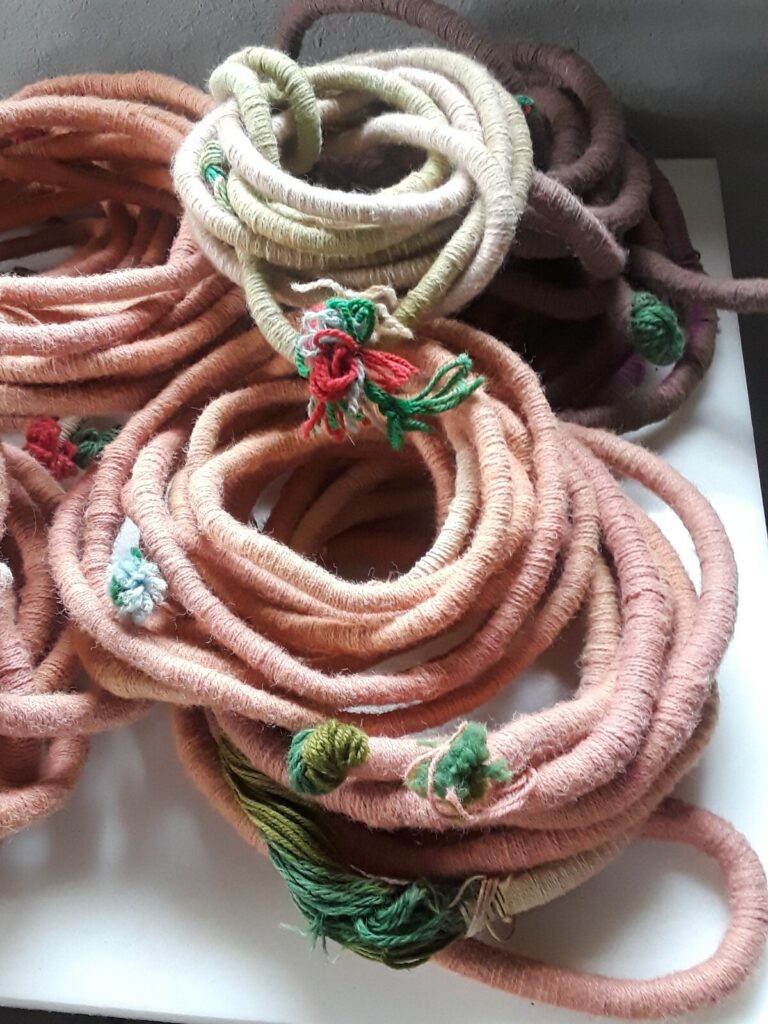
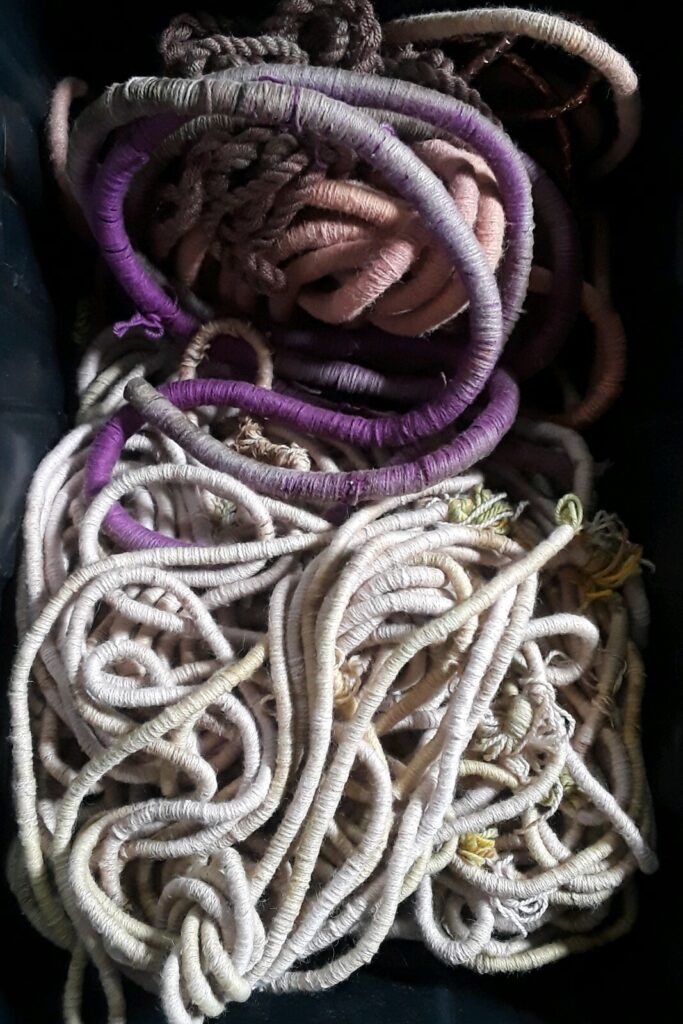
a few years ago i was doing some genealogical research and learned that i have several ancestors who were ropemakers. i already liked working with rope and cordage, so that ancestral connection made sense to me and deepened my affinity with the material. this length of the thickest piece of rope is a bit over 15 feet, and the wool yarn wrapped around it has a total length of ~349 feet. the time spent over the course of just over a week averaged out to 3-4 hours per day. the binding action represented my desire to control what ultimately cannot be controlled. we do not often construe them this way, but our bodies and relationships are all ephemeral, impermanent.
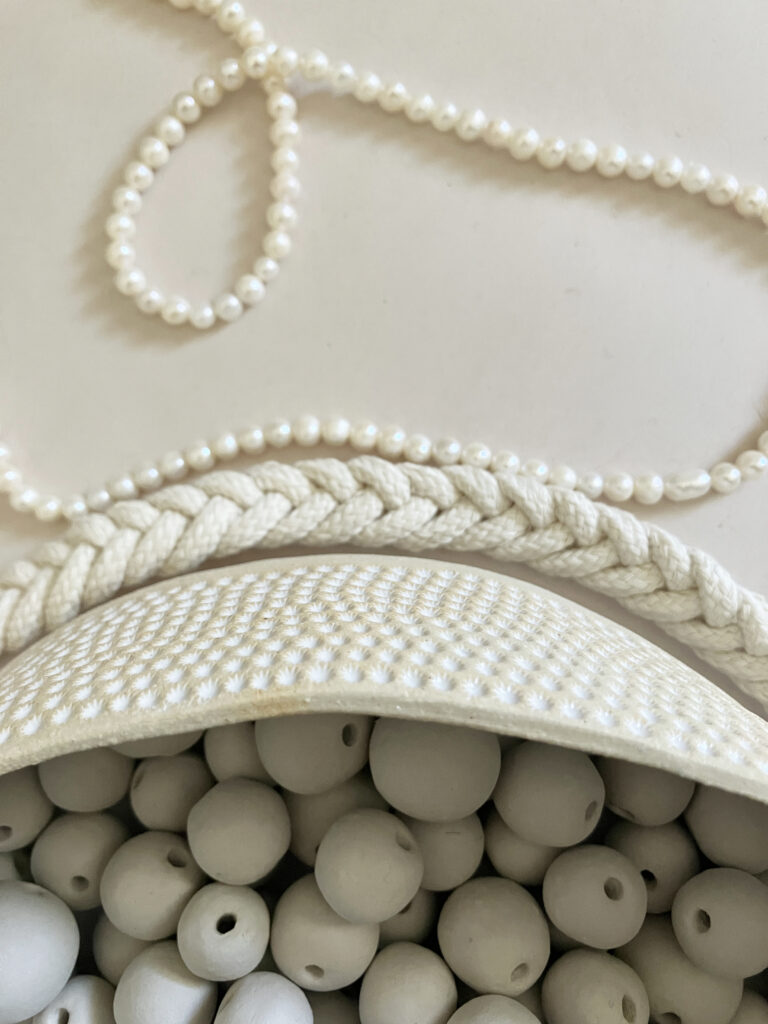
my act of binding or wrapping was also a prayer. i named the assemblage tefillah, the root word of which (in hebrew) has many relevant meanings: struggle, to attach or bind together, take account of/contemplate/judge oneself, to hope. my grief was accompanied by inward questioning. who am i now? or who will i be? a loss or abandonment of identity, coupled with some hope. the hero’s journey involving death and rebirth. i cycle between experiencing grief as struggle and grief as opportunity.
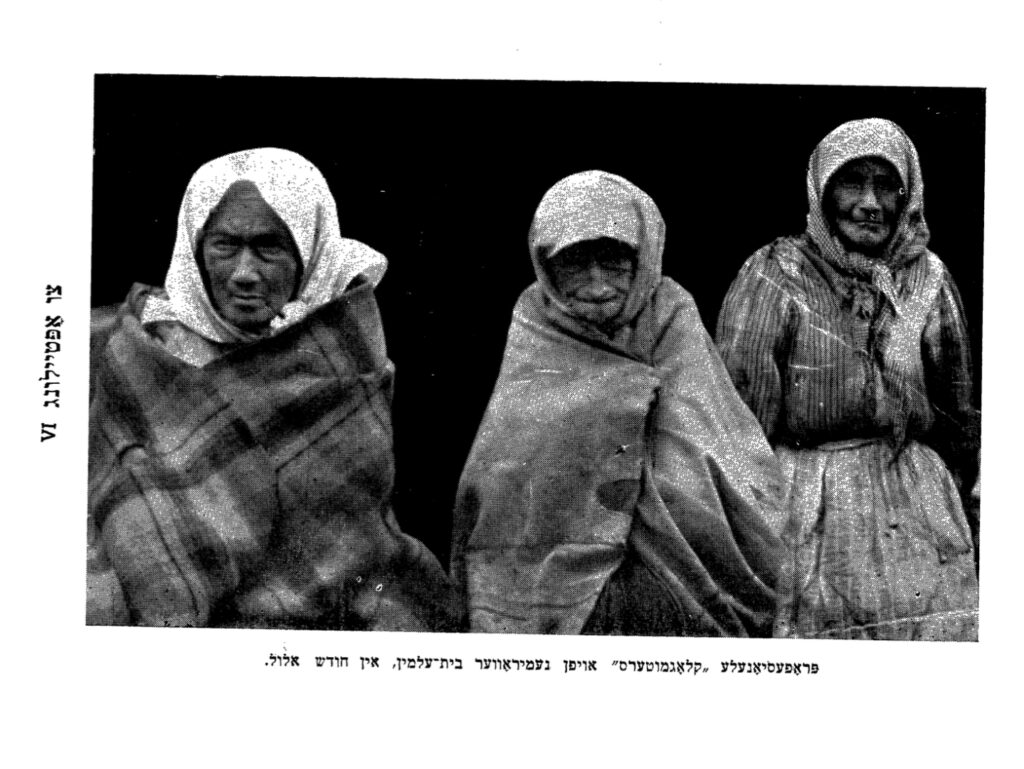
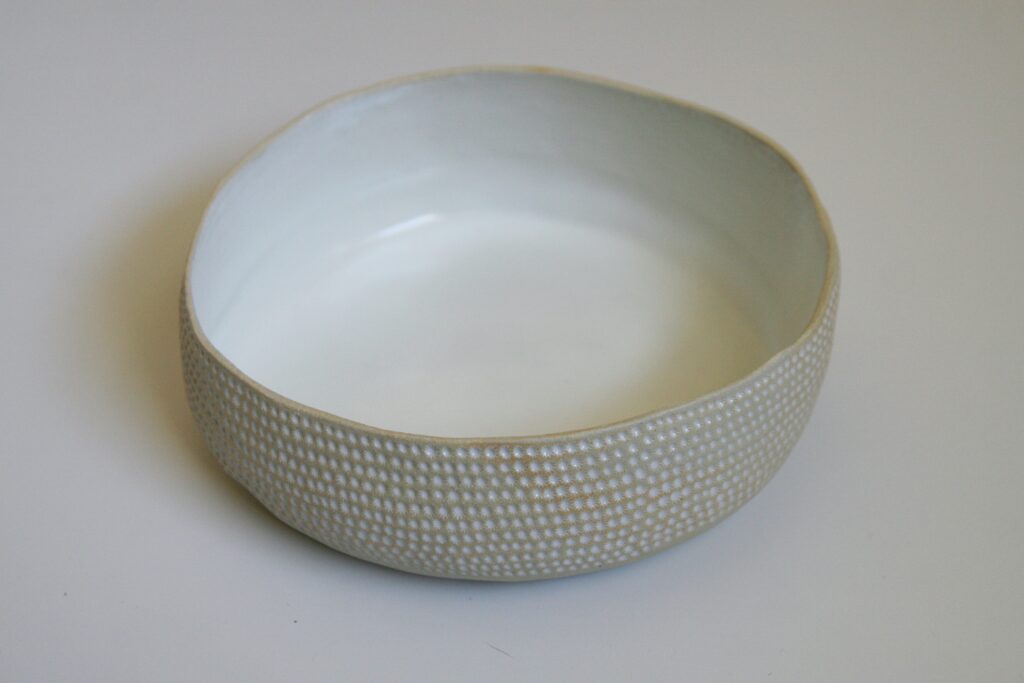
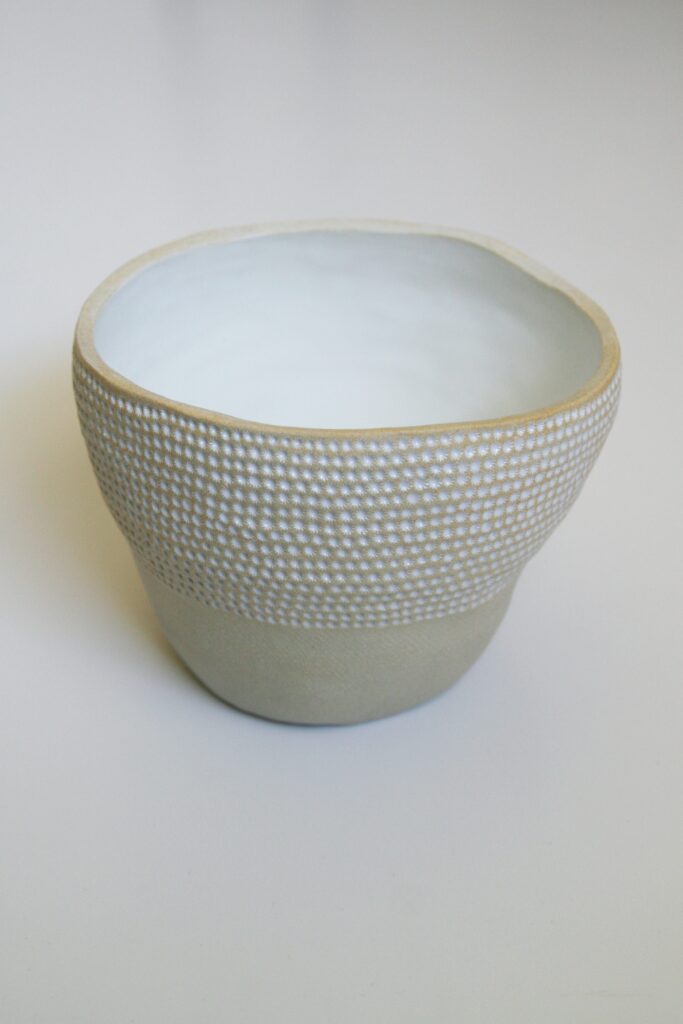
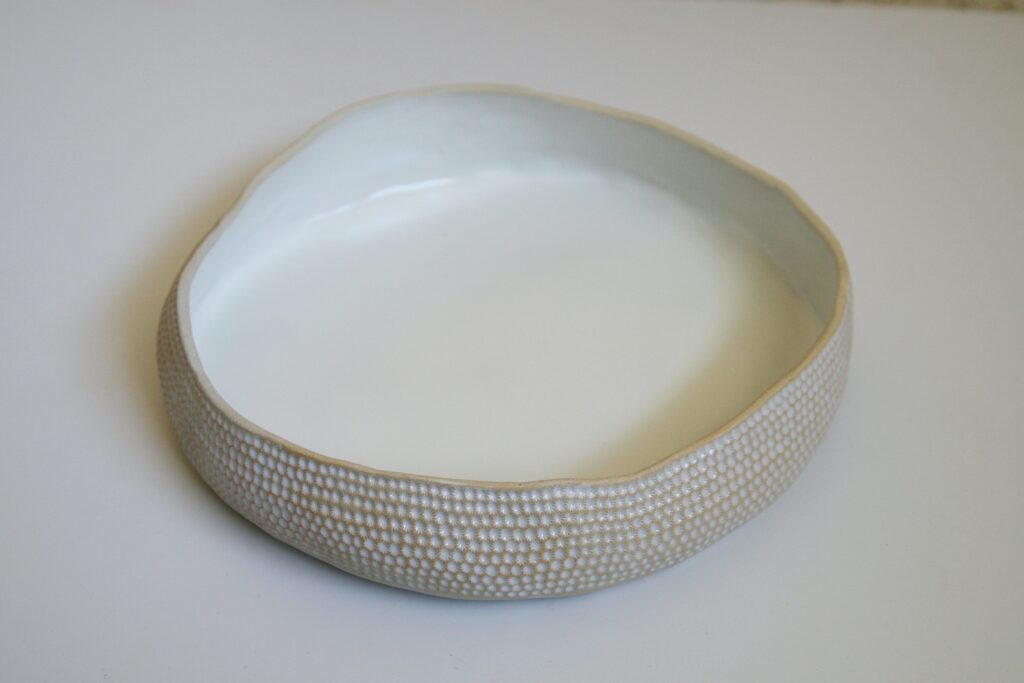
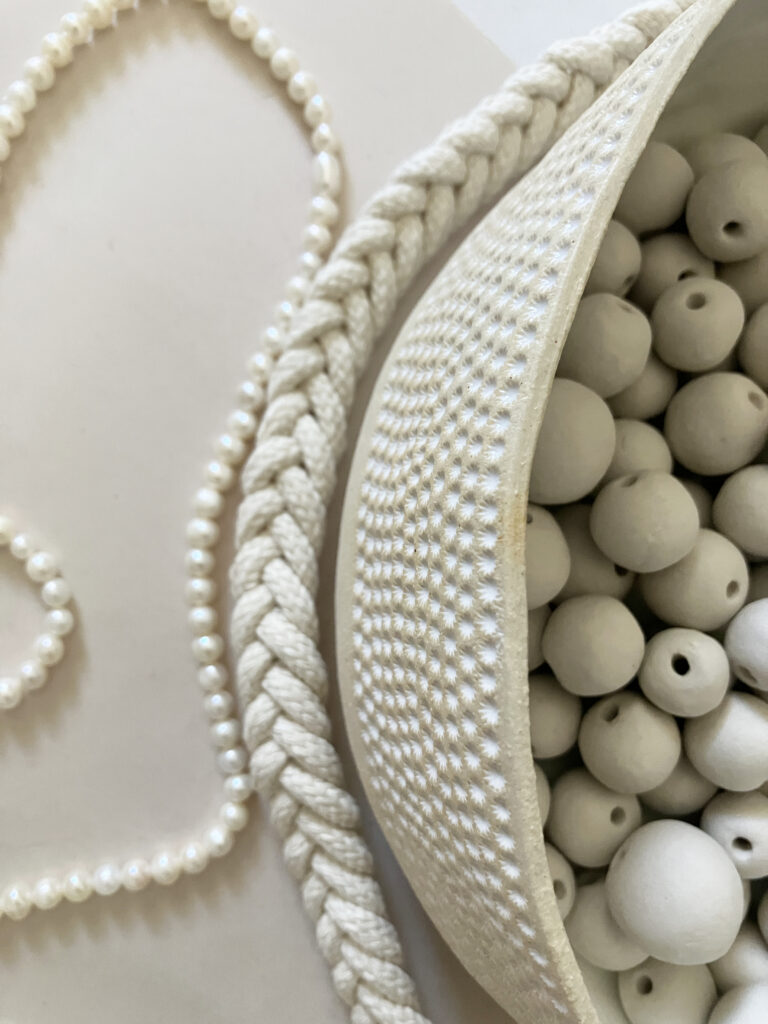
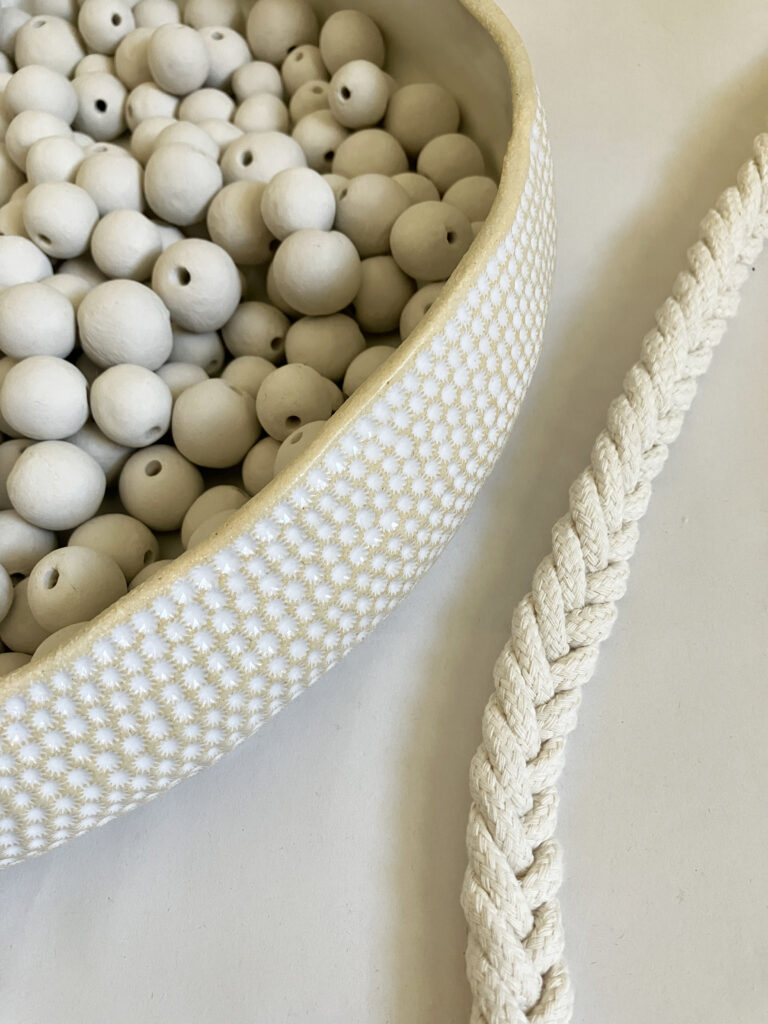
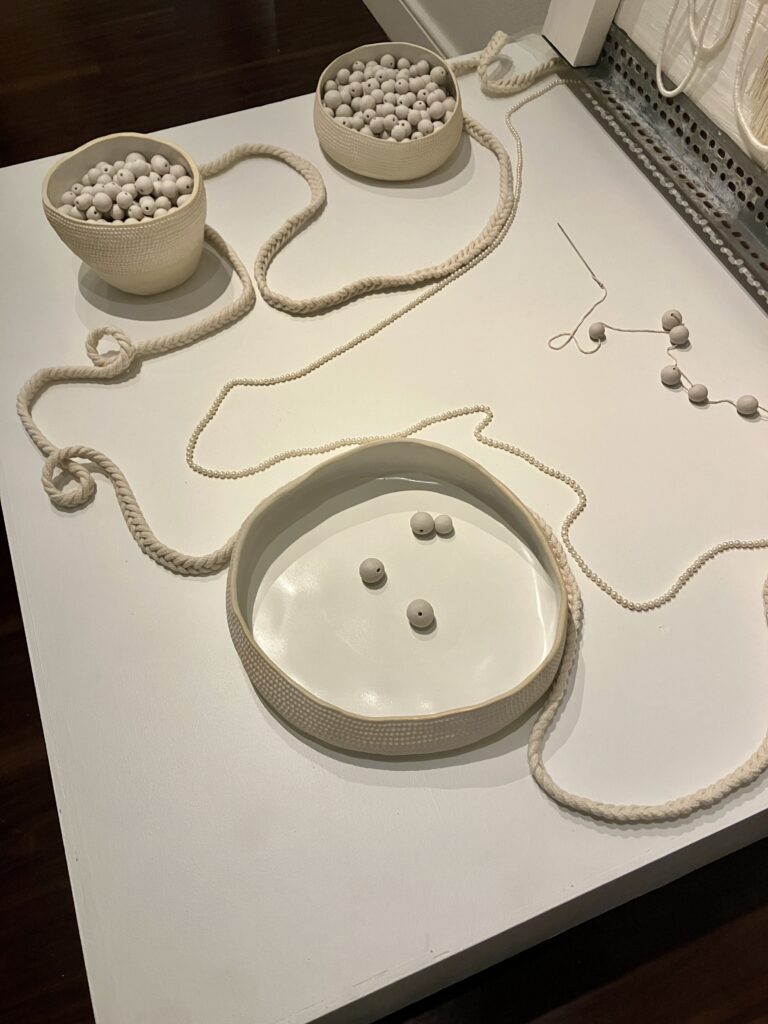
the three ceramic vessels are part of my matriarch series, which explores women and femmes from jewish history. these three pieces are named after the klogmuters of nemirov (a village in ukraine), whose individual names are lost to history. klogmuters were female elders, “whose calling was to weep and lament and also to bring others to tears.” professional grievers, if you will.
four small rituals
no matter where you are in the process or who/what you are grieving, i invite you to honor your grief. these are some practices i have engaged with, and you are welcome to take what works for you and leave the rest, or simply use this as permission to create your own ritual(s).
– if you are visiting the exhibition, you are invited to take a bead, hold it in your hand while you recall your grief, visualize the bead holding your grief, then place the bead in the largest vessel. you may want to do this several times or just once. (i will use these beads to make a long strand for future iterations of the exhibition.)
– at home, consider ritualizing a daily, mundane act – brushing your teeth or your hair, making your bed, making tea, washing dishes or your hands, wiping your feet… in that moment, express your gratitude for grief. grief is a struggle, but it is also a teacher and an opportunity. grief shows us what is most important and gives us a chance to direct the change we are metabolizing.
– go outside and plant your feet on the soil. imagine sharing your grief with the earth through the soles of your feet. the earth is able to hold all of our grief, always.
– rend a garment, or something similar that physically represents your feelings. the somatic experience of tearing fabric is cathartic, but it also makes the abstract sensation of loss into something very tangible.
THE NARROW PLACE
tefillah :: prayer, also:
struggle, to attach or bind together,
take account of/contemplate/judge oneself,
to hope
december 2025, 39″x41″ reclaimed wood, metal, nails, rope, thread, yarn, paint, pearls, needle, over 500 unfired paperclay beads (on a 3.5’x3.5’x2’ pedestal)
nemirov klogmuter eyns, tsvey, dray
november–december 2025, white stoneware clay
bibliography
What The Living Do by Marie Howe
Inciting Joy by Ross Gay
When Things Fall Apart by Pema Chödrön
This is Real and You Are Completely Unprepared by Alan Lew
Forest of Noise: Poems by Mosab Abu Toha
extended bibliography
A Grief Observed by C.S. Lewis
Opening to Darkness by Zenju Earthlyn Manuel
Notes on Grief by Chiamamanda Ngozi Adichie
Le Petit Prince by Antoine de Saint-Exupéry
Duino Elegies by Rainer Maria Rilke
How to Live When a Loved One Dies: Healing Meditations for Grief and Loss by Thich Nhat Hanh
On Joy and Sorrow by Khalil Gibran
The Ships of Theseus by Steve Gehrke
Love Dogs by Jalal Al-Din Rumi
Rings of Saturn by WG Sebald
The Cure for Passion: Grief and its Political Uses by Gail Holst-Warhaft